“Designed in Thailand” shows up on a lot of product pages these days. Sometimes it means something real. Sometimes it’s just geography doing marketing’s job. Telling the two apart takes a bit more digging than reading the tag.
Plenty of combat-sport apparel gets designed in one country, manufactured somewhere else entirely, and printed with a fighter graphic that could belong to any striking sport on earth. None of that is dishonest exactly.
It’s just not the same thing as a t shirt muay thai thailand brand that actually designs, sources fabric, and prints its artwork from within the culture the shirt is supposed to represent. The label reads similarly either way. What’s behind it doesn’t.
What Actually Changes When Design and Manufacture Sit Together
When a brand’s design team and production line exist in the same place the sport actually lives, a few things shift. Artwork tends to pull from real cultural references instead of a stock silhouette.
Fabric choices get tested against actual training conditions, heat, sweat, repeated washing, rather than guessed at from a spreadsheet somewhere else. And feedback from people who train regularly can loop back into the next design run faster, since there’s no ocean and no middle layer of distributors between the idea and the fabric.
Side by Side
| Factor | Genuine local design and manufacture | Generic imported combat-sport tee |
| Artwork source | Drawn from actual cultural motifs and symbolism | Often a generic fighter silhouette, sport-agnostic |
| Fabric testing | Tested against real training conditions | Rarely tied to any specific sport’s demands |
| Fit philosophy | Built around a deliberate oversized training silhouette | Standard retail cut, not sport-specific |
| Feedback loop | Short, direct from trainers and fighters | Long, filtered through distributors |
| Shipping origin | Direct from source | Often re-routed through third-party warehouses |
Neither column guarantees quality on its own. A well-made generic t shirt muay thai thailand can still outlast a poorly made “authentic” one. But the columns do represent two genuinely different starting points, and it’s worth knowing which one a specific purchase actually falls into.
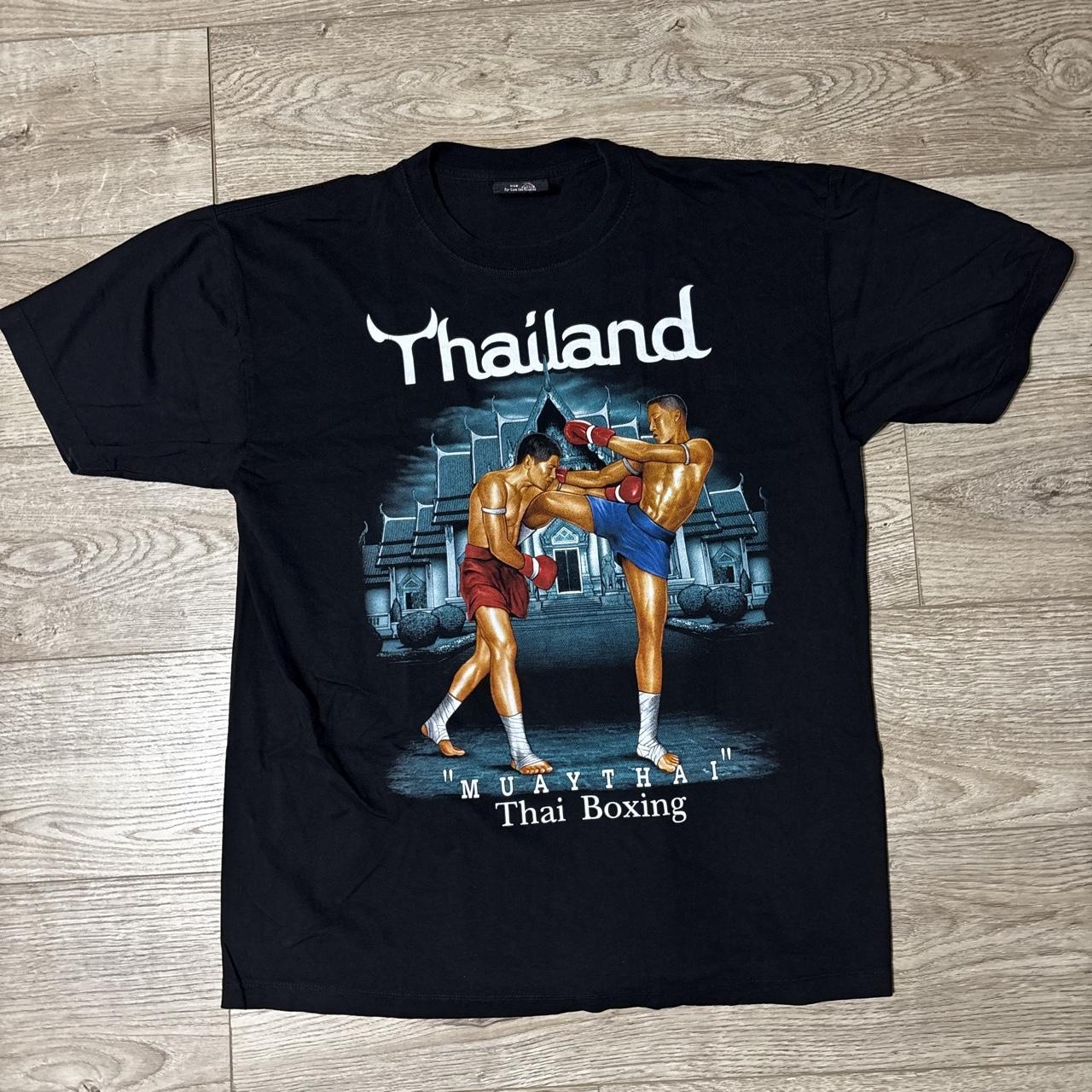
Cultural Artwork Versus Generic Fighter Graphics
A silhouette of someone throwing a kick could belong to any combat sport on the planet. Sak yant linework, specific symbolism tied to the sport’s actual history, can’t. That distinction matters more to some shoppers than others, and there’s nothing wrong with just wanting a cool graphic tee. But anyone specifically hunting for cultural authenticity should look past the silhouette and ask what the artwork is actually referencing.
What to Actually Check Before Buying
- Where the brand says its design work happens, and whether that claim is backed by anything specific
- Whether the artwork references real cultural symbols or just a generic athletic silhouette
- Whether the fabric is described in training-relevant terms, breathability, weight, wash durability, not just softness
- Whether the fit is explained as a deliberate training-oriented cut or just labeled “oversized” with no further context
- Whether the brand has any visible, ongoing connection to people who actually train and compete
A tag can say almost anything. What the fabric, the artwork, and the fit actually do once the shirt is on someone’s back is where the real difference between the two columns shows up.